Wuthering Heights
“Wuthering Heights Lows” ; or Emerald Fennel’s farcically vain “master”class of how you shouldn’t adapt Brontë’s (or, in fact, any other) novel
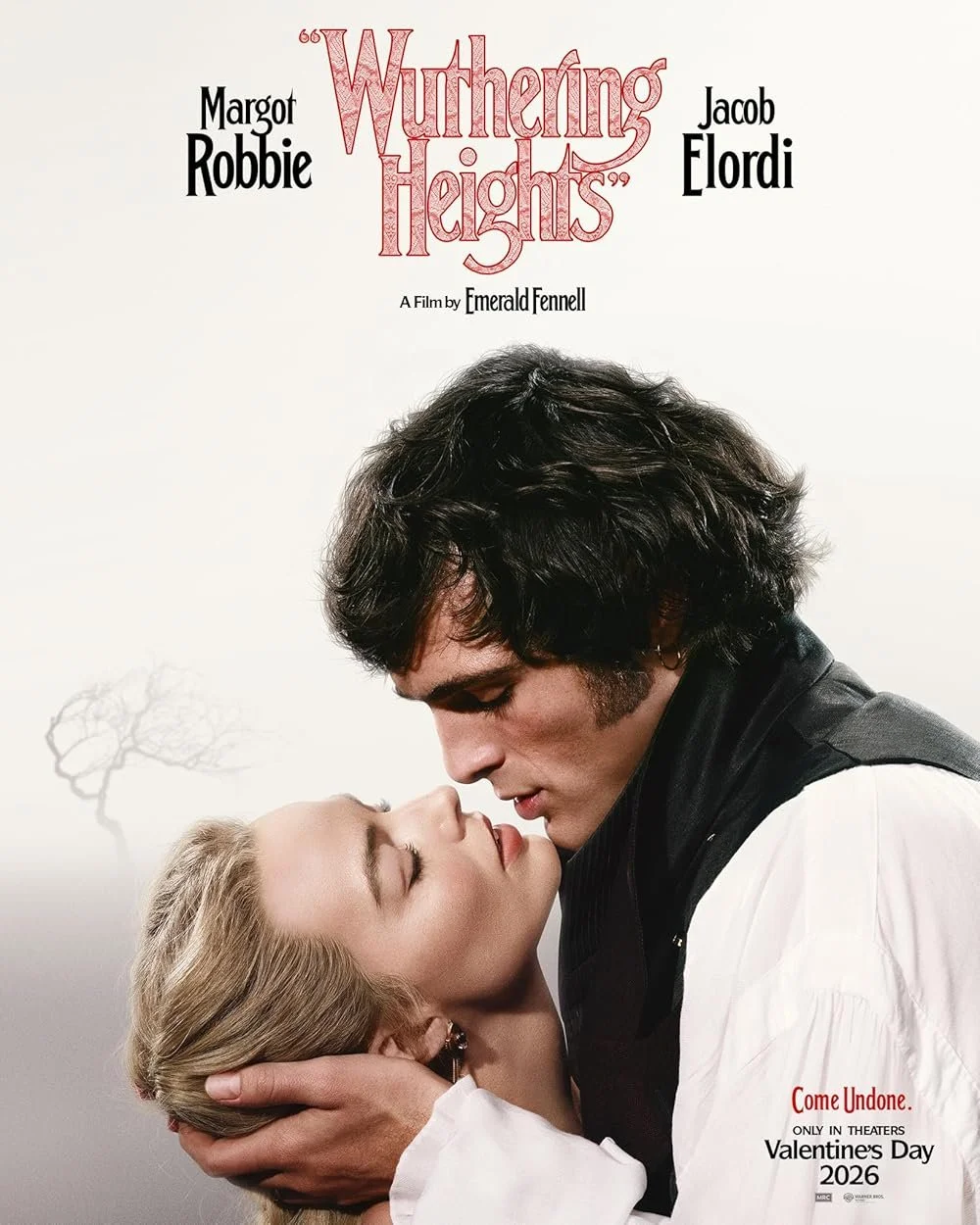
On Friday, February 13th - an ironically fitting date for such horror to be released - the world was graciously (or bawdily) bestowed with the long-awaited and much-discussed “adaptation”- a word that I put in quotation marks the way its director did with the title-of Emily Brontë’s novel of the same name, but by far not the content. Let’s get the orthography out of the way from the beginning: faultily utilised as a (precarious) shield of defending her utterly absurd, wacky reshape of the original source, Fennell hopes to get the provocative flash of attention – merely for the commercial purposes - and yet claims that it’s a version of a story, rather than the story itself, to come clean in front of the loyal readers. Very meta.And yet lacks a lot of self-awareness. Further adding numerous intertextualities, like 1939’s on Gone with the Wind, the poster of which is literally copied, she guarantees “cinephiles” (there are going to be a lot of italics in this “review”, get ready) diving deeper into the world of the visuals, frantically eating up every reference to the (mostly problematic) films of the 20th century. You know the secret-a few visual references to the great minds that came before you, and you are in an artistic success. At least that’s what they think.In this Colleen Hooverificised, borderline BDSM sexual nightmare, Fennel attempts to take Saltburn to a higher, widespread ground, utilising the 19th century Yorkshire Moors as the podium for her senselessly barmy ideas. For a second, let’s actually imagine that her intention was, actually, to show how one shouldn’t approach an adaptation, and this preposterous film is actually a social experiment on how much of unethical bullshit people are ready to be fed from the hands of Jacob Elordi and Margot Robbie to claim that they are a fan. So, here is a guide how not to adapt Wuthering Heights: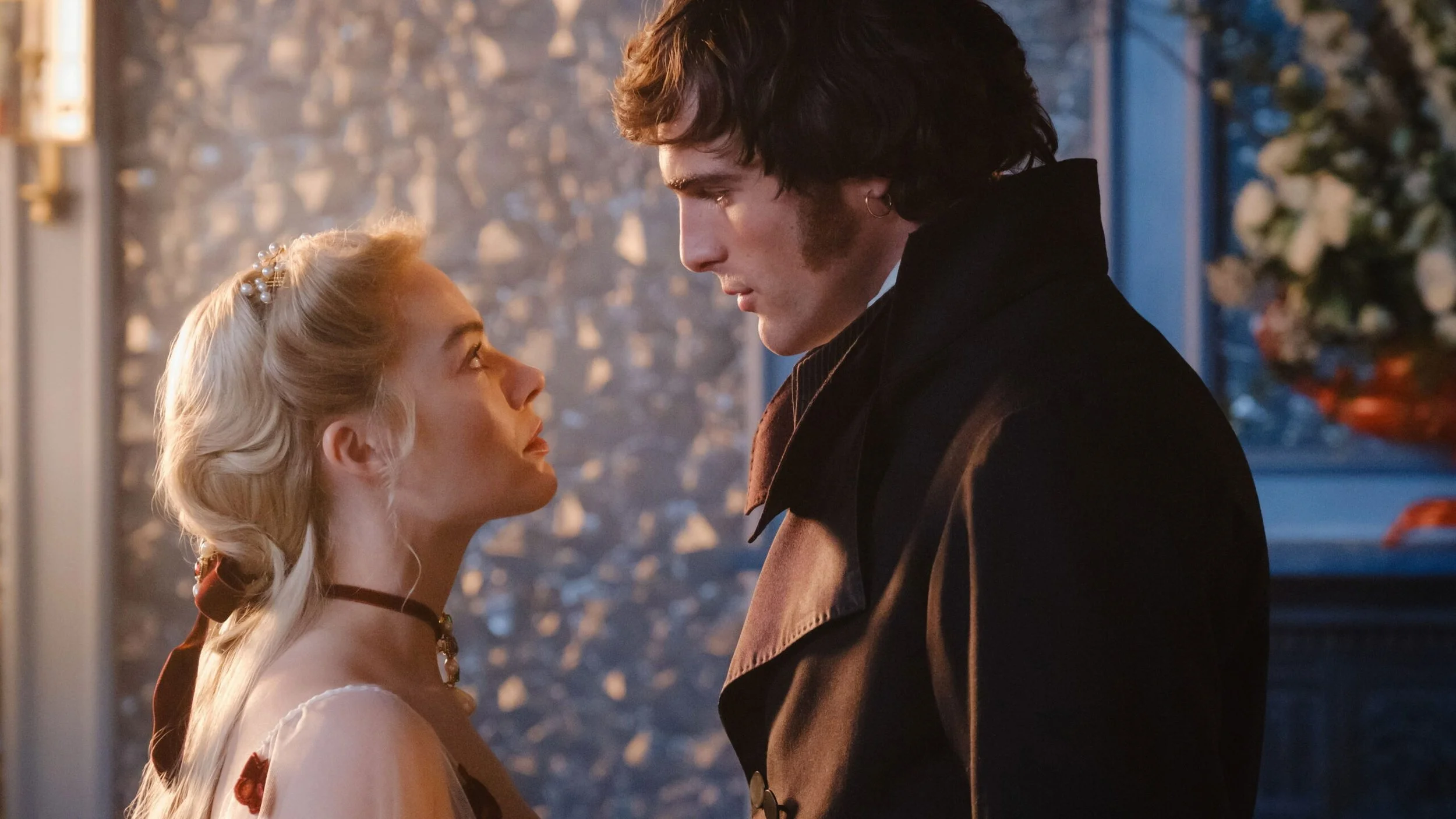
Step 1: Do not engage in whitewashing and deliberate miscast of the actors to the extent that one of the most complex and essential themes of the novel - race and racial perception within highly conservative 19th century milleu - is completely erased, reducing Cathy’s and Heathcliff’s relationship to a spicy, fanfictionised, vulgarly carnal affair.
Yes, in the film, Heathcliff is portrayed as a class outsider, with Cathy claiming that marrying him would socially “degrade” her. And yet, when Heathcliff comes back rich, she doesn’t go back to him. In one of the scenes her father, Mr Earnshaw, tells Heathcliff that despite his enviable climb to the top of the class system, he is not enough for Cathy.
But the reason is never given. We genuinely don’t know why she wouldn’t go back to him. Because of her marriage? She is not morally ethical enough, with the constant, illicit meet-ups for a “quicky” with Heathcliff serving as an undeniable proof of that. Brontë’s writing and plot-constructing skills being slightly better than Fennel’s actually gives the readers an answer: it is Heathcliff’s ethnical background, his racial identity, patronised and prejudicially perceived as inferior by the Victorian society, that obtrudes their love. An inherent and inescapably important aspect to the character.
What about the film? It claims that their affair is impossible. But why? And don’t say morals. They both severely lack that.
***
So, there is another thing Fennel kindly teaches us to be cautious of: plot-holes, for the the lack of sufficient biographical factors will make the characters’ relationship look wannabe-tragic-but-teenage-like-ludicrous, and inevitably present itself as a one-dimensional loop of woe, vexatious and unbearable to consume without a good laugh, instead of a complicated narrative about two people, born and raised in drastically opposing societal polars, their love laying (an actually devastating) victim to the magisterially capitalistic and imperiously racist society.
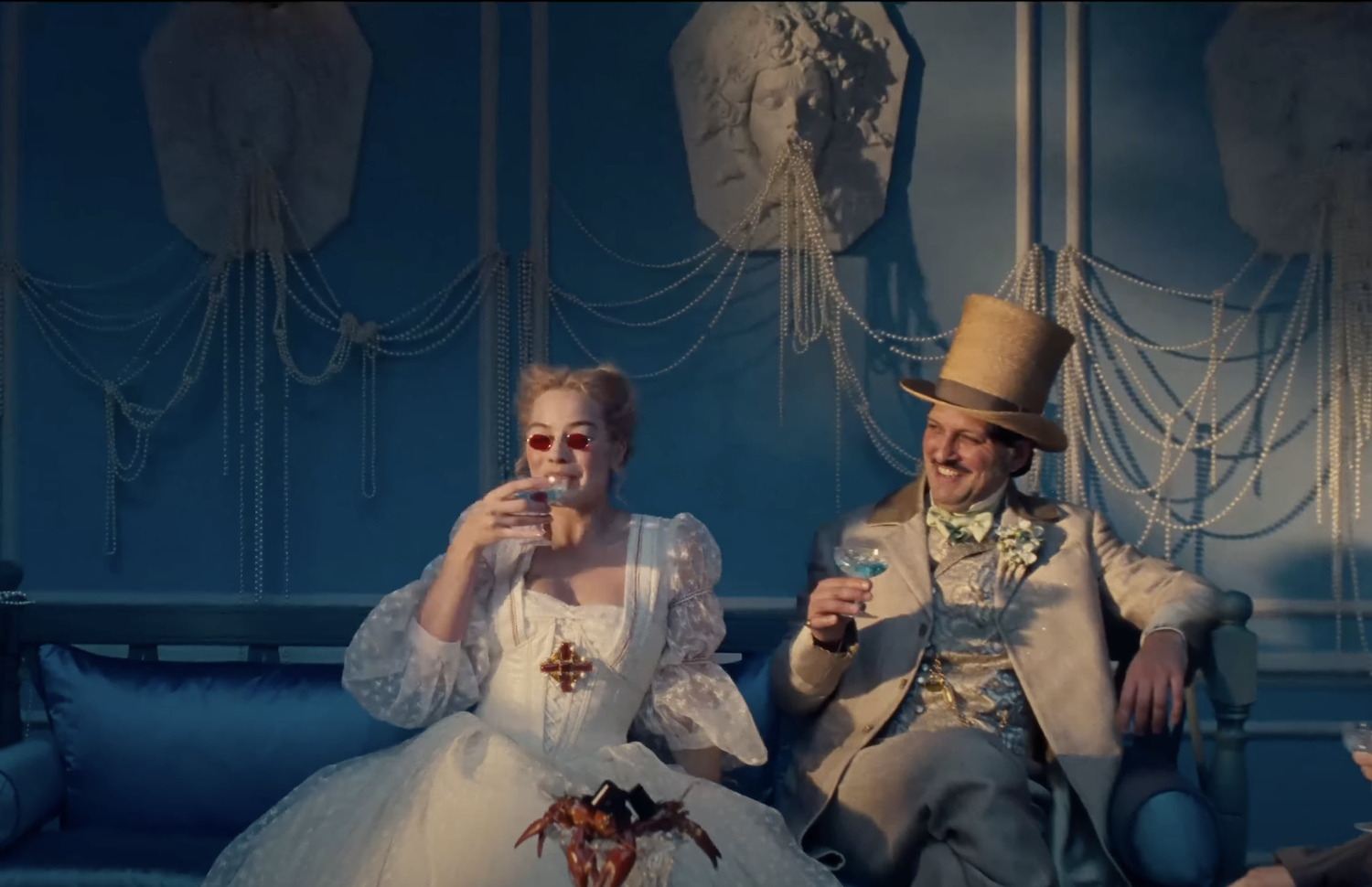
Step 2: Do not add misogyny into a place which is already drowning in it.
When it comes to adaptations, accuracy has never been much of a priority to me, as the vast majority of my favourite book-to-screen movies have either shifted from the plot, removed/added new characters and/or drastically alter the ending. The most recent picture that employs such approach was Guillermo del Torro’s highly subversive take on Mary Shelley’s Frankenstein, or, a few years prior to that, Greta Gerwig’s version of Little Women, the ending of which was as close to its textual source as Emerald Fennel is to an Academy Award for her phenomenal, game-changing, career-defining, generation-shifting and culture-crafting W(i)thering Heights.
What Gerwig and del Torror do, however, which Fennel fails to grasp, is that, by changing certain narrative aspects of the novels, they make the texts relevant for the modern audience.
In Little Women, the director has portrayed an intentionally ambiguous ending whether Jo marries Friedrich Bhaer or not; del Torror’s rewriting of Frankenstein, especially its ending, was even more extreme.
What both of them, at the end of the day, do with their adaptations is giving voice to the female characters that they were societally deprived of at the times when the novels were written. In del Torror’s Frankenstein, we witness an utterly different take on the character of Elizabeth, who is much more outspoken and present than in the book; whilst she also, ultimately, faces the same faith as Elizabeth in Shelley’s novel, she eventually gains a sense of self, a sense of purpose and an identity which does not revolve neither around her husband, uncle or, in fact, any men, contrasting with the book version where she dies as a martyred figure, suffering Victor’s indiscretions.
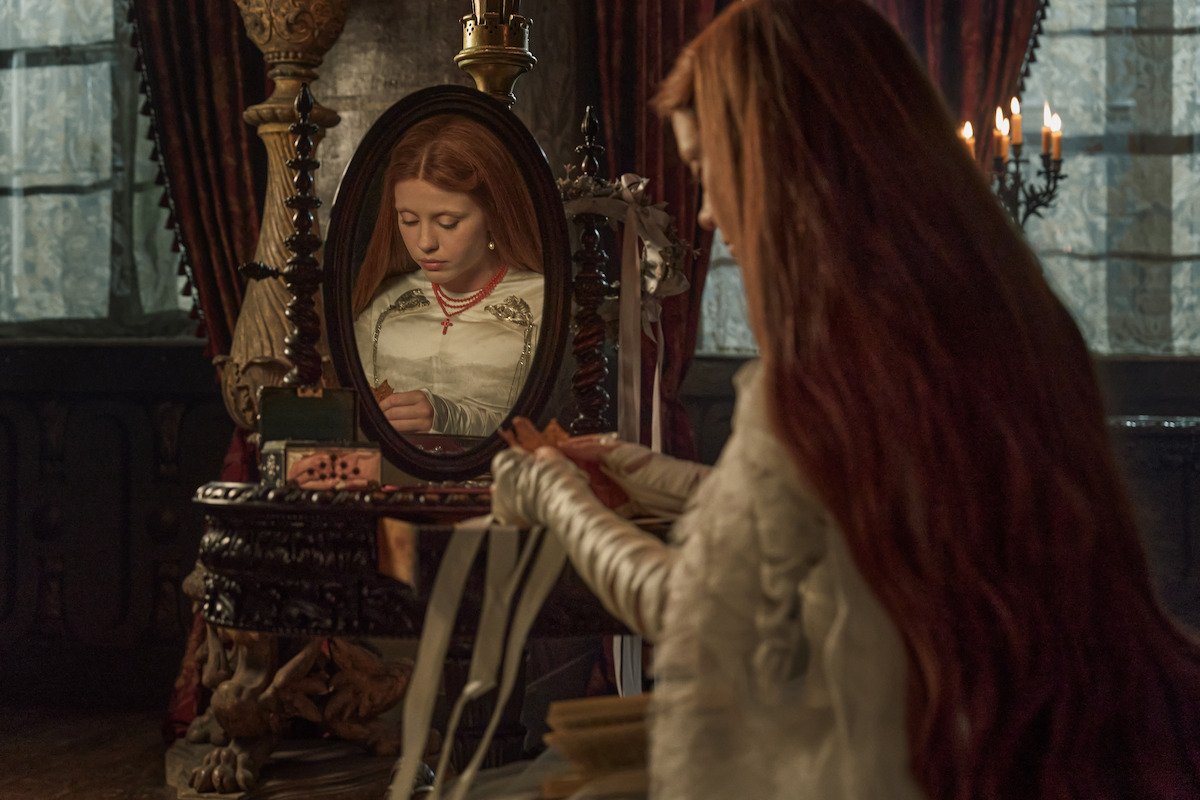
Elizabeth in del Torro’s Frankenstein
Played by Mia Goth
Well, back to our filmmaking tutorial: what you SHOULDN’T do is take a character (in Brontë’s case Isabella Linton) who is subjugated to the most severe forms of emotional and physical domestic abuse from her husband - the least of his violence, for instance, being hanging her dog after they married - and turning the character into an erotically obsessive, sexually passive and lasciviously lustful woman, with a dog collar on her neck and on her fours in front of her husband. The dog collar element, and our perception of it, apart from being sexually degrading exacerbates when knowing what Heathcliff did to her dog in the original source.
To continue with the don’ts, what you SHOULDN’T do is take a victim of abuse - which women, of all classes, were subjected to during the Victorian times - and reduce that character to a one-dimensional sex object, thus exploiting and deforming everything the author wanted to communicate through the character - that being a social critique on the patriarchal, overbearing misogyny women constantly were weakened by.
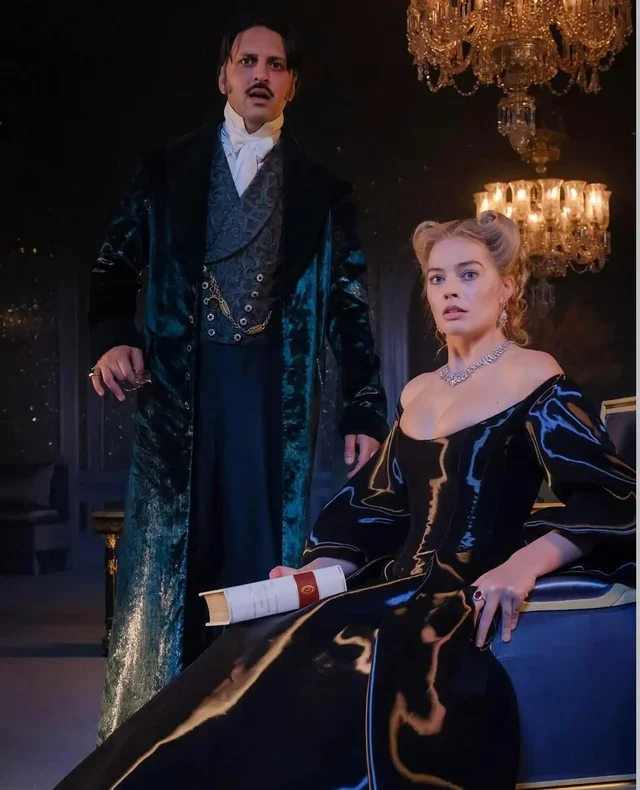
Step 3: Do not get your costumes from Shein. Or, if they are not from Shein, don’t make them look so cheap that they look like you have gotten them from an ethically questionable place…
No comments.
